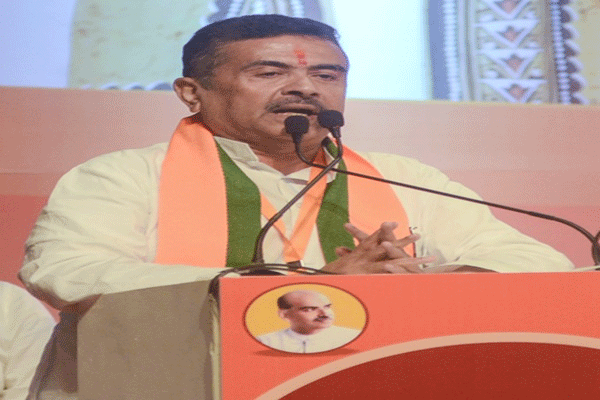
West Bengal’s chief minister-elect Suvendu Adhikari announced a historic dawn for the state as it ushers in a new era of governance under a double-engine administration. Adhikari emphasized that Saturday marked the end of misrule and the official beginning of days characterized by ‘Sonar Bangla’, a term translating to ‘Golden Bengal’.
Ahead of Prime Minister Narendra Modi’s arrival in Kolkata for his oath-taking ceremony at the Brigade Parade Ground, Adhikari shared a message on X, welcoming the Prime Minister and celebrating this pivotal moment in West Bengal’s history. He described the event as a culmination of the “dreams of our founding fathers,” which resonates strongly within the political landscape of the state.
“This is indeed a historic dawn for West Bengal,” stated Adhikari. “It is a moment of profound pride to welcome our visionary leader, PM Narendra Modi Ji, to the City of Joy. Today, as we witness the swearing-in ceremony of the first-ever BJP government in West Bengal since Independence, we fulfill the dreams of our founding fathers.”
The Chief Minister-elect’s words reflect a broader sentiment among BJP supporters, who view this governance transition as a vital milestone, paving the way for development and economic growth. Many voters in the state see this new administration as a promise of stability and effective governance.
As the BJP prepares to assume power, the party’s focus remains on leveraging the double-engine model of administration, which combines both state and central government efforts. This model is expected to enhance infrastructure, address local challenges, and propel socio-economic development across the state.
Adhikari’s leadership and the BJP’s commitment to a transformative agenda will likely play a crucial role in the state’s future. With significant public support during the recent elections, the Chief Minister plans to implement policies that resonate with the aspirations of the Bengali populace.
In summation, the arrival of the BJP government sets the stage for a new chapter in West Bengal’s political and cultural narrative, offering hope for progress and prosperity as articulated by Suvendu Adhikari in his fervent address.