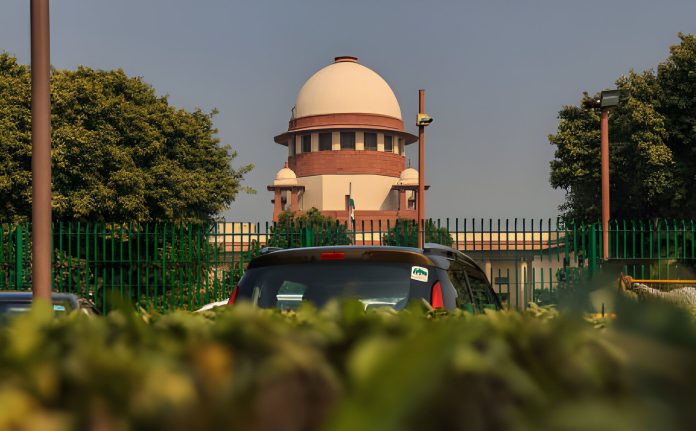
The Supreme Court of India on Wednesday took a pivotal step by referring the question of whether litigants can submit anticipatory bail applications directly to high courts, or if they must first approach sessions courts, to a specially constituted three-judge bench.
Justices Vikram Nath and Sandeep Mehta stated, “This matter requires to be heard by a three-judge bench,” indicating the complexity of the issue at hand. The court also appointed senior advocate Siddharth Luthra as amicus curiae to offer legal guidance on the matter.
Concerns raised during the proceedings particularly focused on the practice of the Kerala High Court, which has faced scrutiny for regularly entertaining anticipatory bail applications without litigants first seeking relief from sessions courts.
During a session on September 8, the Supreme Court highlighted the anomaly, observing, “One issue that is bothering us is that in the Kerala High Court, anticipatory bail applications are regularly entertained directly. Why is that so?” This pointed question underscores the potential deviation from established legal practices.
The court referenced provisions in both the traditional Code of Criminal Procedure and the newly introduced Bharatiya Nagarik Suraksha Sanhita (BNSS), 2023. The BNSS outlines a clear procedural hierarchy for bail applications, where Section 482 specifically addresses the process for granting bail to individuals facing arrest.
Kerala’s Unique Practice
The Supreme Court bench noted that no other state appears to follow the practice seen in Kerala, remarking, “It doesn’t happen in any other state. Only in the Kerala High Court… applications for anticipatory bail are regularly entertained directly.”
This observation emerged while the court was hearing a plea from two individuals contesting a Kerala High Court ruling that denied them anticipatory bail. The petitioners had approached the high court directly, bypassing the sessions court for their bail application.
The Supreme Court expressed apprehension that this practice could impede the courts’ ability to receive comprehensive factual records that would traditionally be provided to the sessions court before considering bail applications.
“We are inclined to consider whether the option to approach the high court is a matter of choice for the accused or whether it should be mandatory to first go to the sessions court,” the bench elaborated. This statement signals a potential shift in legal interpretation regarding the pathway for seeking anticipatory bail.
The top court has since issued a notice to the Kerala High Court through its Registrar General, seeking clarification on this important legal practice.
The decision to bring clarity to the anticipatory bail process holds significant implications for the justice system and the rights of accused individuals. As the three-judge bench prepares to hear the case, the legal community closely watches for outcomes that could set precedents across India.
Legal experts anticipate that the resolution of this matter may not only shape the practice of anticipatory bail applications in Kerala but could also influence national standards for criminal procedure regarding bail. The Supreme Court’s proactive approach towards addressing potential deficiencies in the judicial system highlights the importance of clear procedural guidelines that uphold legal integrity.