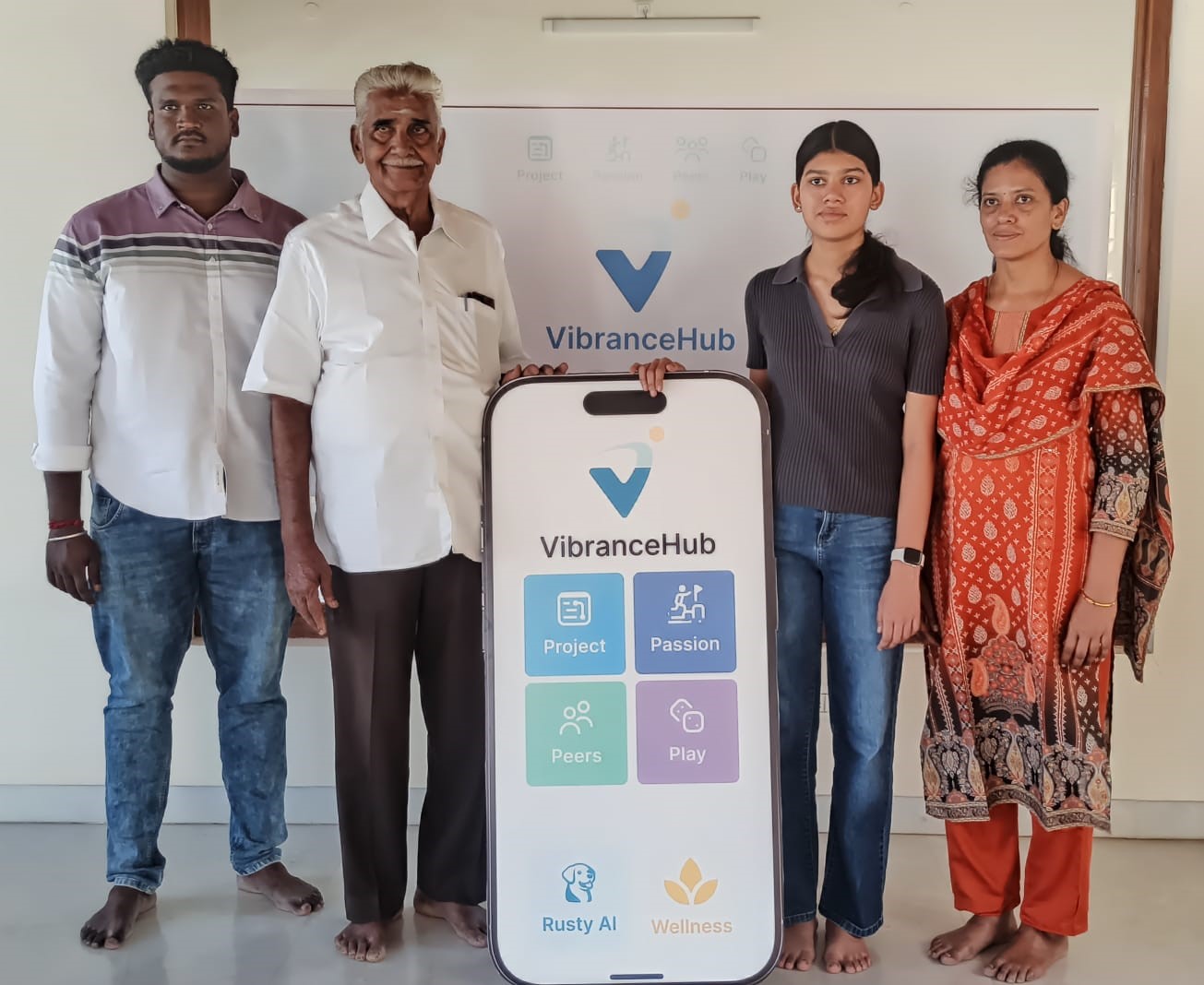
COIMBATORE — Rithanya Sivaram, a Class 12 student at The Indian Public School, has launched Vibrance Hub, a platform enhancing project-based learning and wellbeing. This initiative fills a crucial gap as India transitions towards an AI-focused future, emphasizing creativity and continuous innovation over traditional rote learning.
‘In the age of AI, information is commoditized. What matters now is what you can make, how you think, and whether you can sustain creative work over time,’ says Sivaram. ‘Atal Tinkering Labs have provided the tools for tinkering on a national scale. Vibrance Hub offers the scaffolding, community, and wellbeing practices to help students transform their interests into lasting productions.’
Vibrance Hub draws inspiration from the MIT Lifelong Kindergarten framework — Passion, Projects, Peers, and Play. This foundation emphasizes that maker education is not solely about constructing physical items. It focuses on nurturing computational thinking, resilience through iteration, and collaboration—skills that remain irreplaceable by AI technologies.
Every child approaches challenges with bold experimentation, yet standardized testing pressures gradually strip away this confidence. The trend pushes students towards caution, self-criticism, and an aversion to experimentation without guaranteed success. As a result, their intrinsic creativity gets stifled, leaving many to believe they are ‘not creative.’
In many respects, Vibrance Hub signifies a crucial return to the educational roots of India. Before Macaulay’s infamous Minute on Education in February 1835, which established a rote-learning framework for colonial administration, the country’s gurukul system favored experiential learning. Students engaged actively in the subjects they studied — metallurgy through forging, astronomy through observation, and medicine through practice.
The NEP 2020 advocates for a renaissance of this maker-centric approach. It recognizes that India’s future prosperity lies not in information repeaters but in creators and innovators.
Initiatives like the Atal Innovation Mission (AIM), launched in 2016 by NITI Aayog, reflect India’s most significant effort to implement the maker-centric philosophy on a national level. AIM responds to the goals set out in NEP 2020, actively fostering creativity and innovation through the establishment of hands-on learning infrastructures across the country.