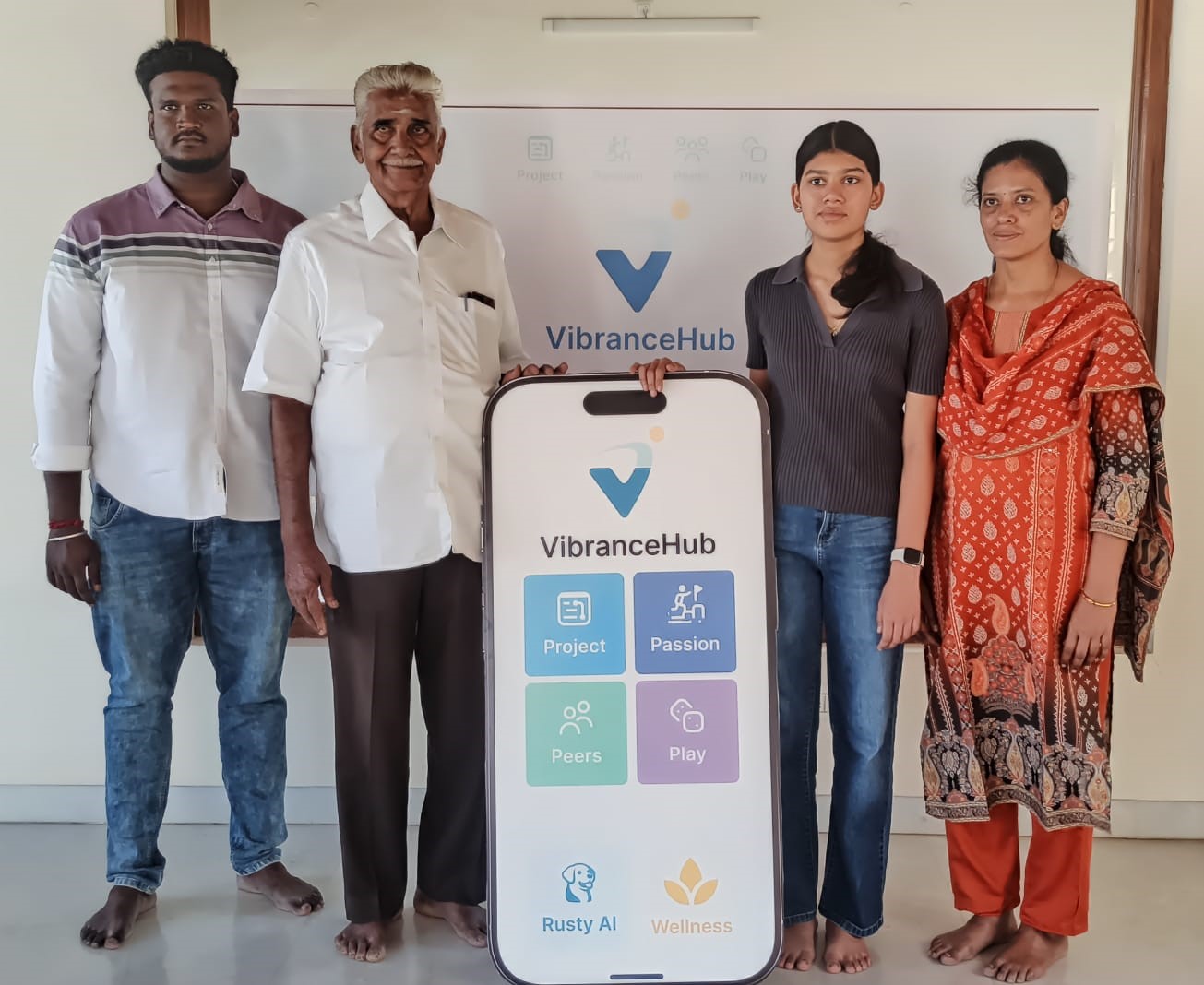
COIMBATORE — Rithanya Sivaram, a Class 12 student at The Indian Public School, has launched Vibrance Hub, a pioneering platform aimed at integrating project-based learning with wellbeing practices like yoga. This initiative addresses a critical gap as India prepares its students for an AI-dominated future, where creativity and sustained innovation take precedence over rote memorization.
“In the age of AI, information is commoditized. What matters now is what you can make, how you think, and whether you can sustain creative work over time,” says Sivaram. She highlights that Vibrance Hub not only encourages students to explore their interests but also fosters a community where they can share insights and practice wellbeing through yoga.
The platform builds on MIT’s Lifelong Kindergarten framework—Passion, Projects, Peers, and Play. It aims to equip learners with essential skills such as computational thinking and resilience through iteration. Siddharth, an educator from Coimbatore, points out, “The ability to collaborate and innovate is something no AI can replicate. Rithanya’s initiative embodies these traits.”
Vibrance Hub represents a return to India’s educational roots. Before the colonial education system imposed a rote-learning model in the 19th century, India’s gurukul tradition emphasized learning through active creation and problem-solving. For instance, students learned metallurgy by forging tools and medicine through practice.
The National Education Policy (NEP) 2020 explicitly advocates for a revival of this maker-centric approach, recognizing that India’s economic and social progress hinges on fostering creators and innovators instead of mere information processors.
The Atal Innovation Mission (AIM), launched by NITI Aayog in 2016, aligns with this vision. AIM signifies India’s most ambitious attempt to implement a maker-centric philosophy at scale. It addresses the NEP 2020’s call to nurture creativity and innovation by establishing tangible infrastructure for hands-on learning throughout the nation.
“The timing for such initiatives is perfect,” remarks educational reformer Dr. Ananya Sharma. “With the challenges posed by the digital age, projects like Vibrance Hub pave the way for a new kind of education—one that prepares students not just for exams but for life as innovative thinkers.”
Vibrance Hub also prioritizes mental and physical well-being by integrating yoga into its curriculum. Sivaram believes that achieving a balanced state of mind is essential for true creativity. “Yoga teaches focus and mindfulness, both critical for sustained creative output.”
As educational institutions grapple with the demands of modern-day learning, initiatives like Vibrance Hub highlight the importance of nurturing creativity, innovation, and wellbeing in students. By merging project-based learning with holistic wellbeing practices, innovators like Rithanya Sivaram offer a glimpse into a promising future for education in India.