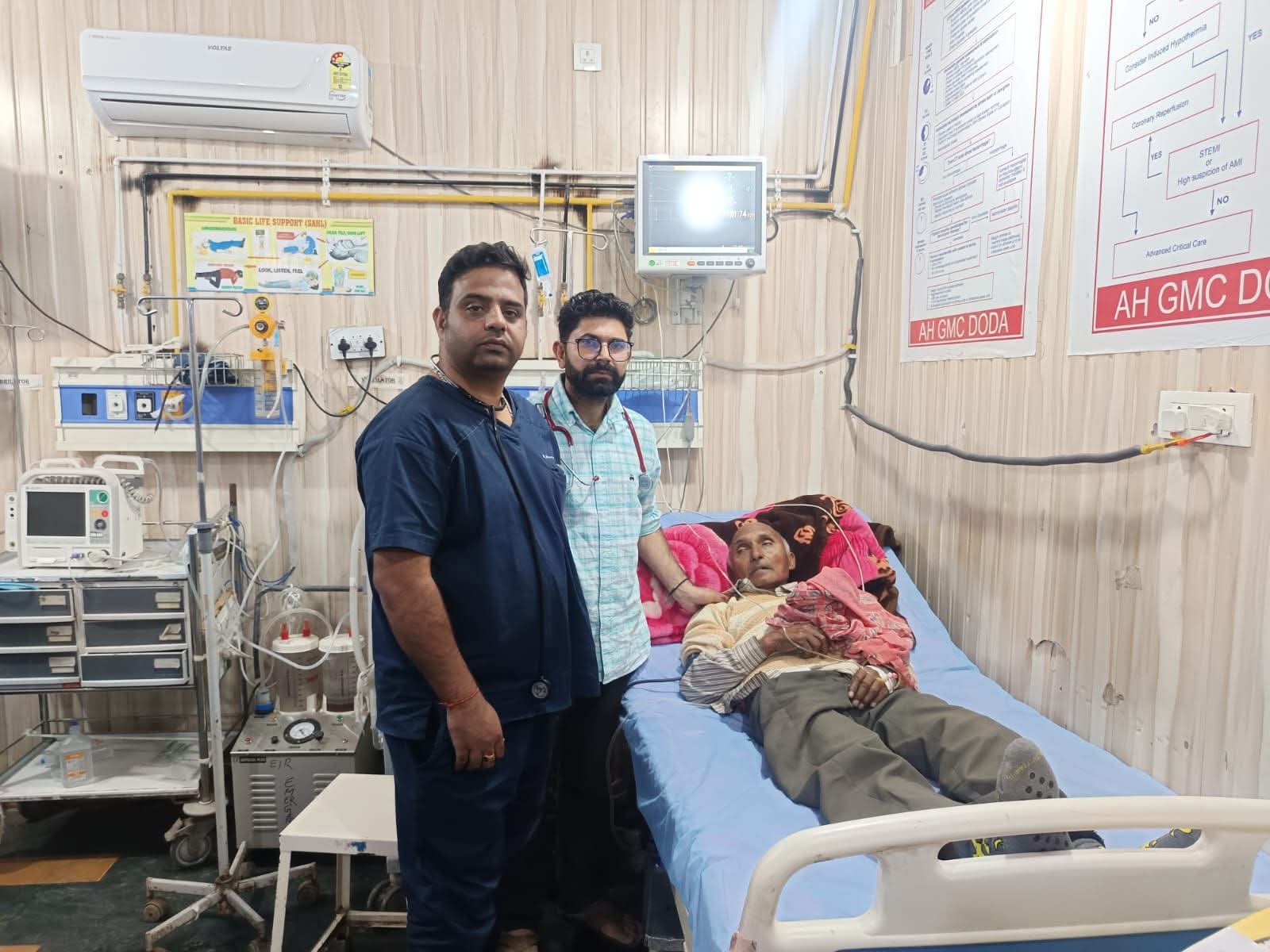
Doda, Nov 2: Government Medical College (GMC) Doda has achieved a significant milestone by successfully performing its first-ever thrombolysis procedure for stroke treatment, marking a revolutionary development in emergency healthcare services in the Chenab Valley.
This historic procedure took place under the expert guidance of Principal Dr. Rakesh Bahl and Head of the Department of Medicine, Dr. Amir Hussain Parray. Their leadership ensured the local administration of this advanced and time-sensitive treatment for the first time.
The patient, identified as Roshan Lal, a resident of Dolli in Gundna tehsil, exhibited classic stroke symptoms. Upon his arrival at GMC Doda, the medical team composed of Dr. Govinder Kumar (MD Medicine), assisted by Dr. Divyanshu (Resident Doctor) and Dr. Momin (Intern), promptly evaluated and treated him.
The entire process benefitted from robust technical and logistical support provided by Mr. Rajinder Singh, Mr. Arif Mir, and dedicated nursing staff who played crucial roles in managing the procedure.
Thanks to the thrombolytic therapy, experts confirm that Roshan Lal is recuperating well from the procedure. This successful intervention represents a dramatic shift in stroke care for the residents of Doda and neighbouring regions.
Previously, patients experiencing acute strokes faced delays while being transferred to GMC Jammu or other major medical centres, often jeopardizing their chances of recovery. The successful thrombolysis at GMC Doda now enables timely access to critical stroke care within the district.
Dr. Bahl praised the entire medical team, stating, “This is a landmark achievement for GMC Doda and provides reassurance to countless individuals in remote areas who can now access advanced treatment without undue delays.”
Dr. Parray added, “This success showcases our team’s evolving skills and dedication to emergency medicine. It signifies more than just a medical accomplishment — it’s a beacon of hope for the entire Chenab region.”
The procedure has garnered significant appreciation from the local community, highlighting an important step towards enhancing rural healthcare infrastructure. This advancement will ultimately aid in saving lives, particularly during the critical golden hour of stroke onset.