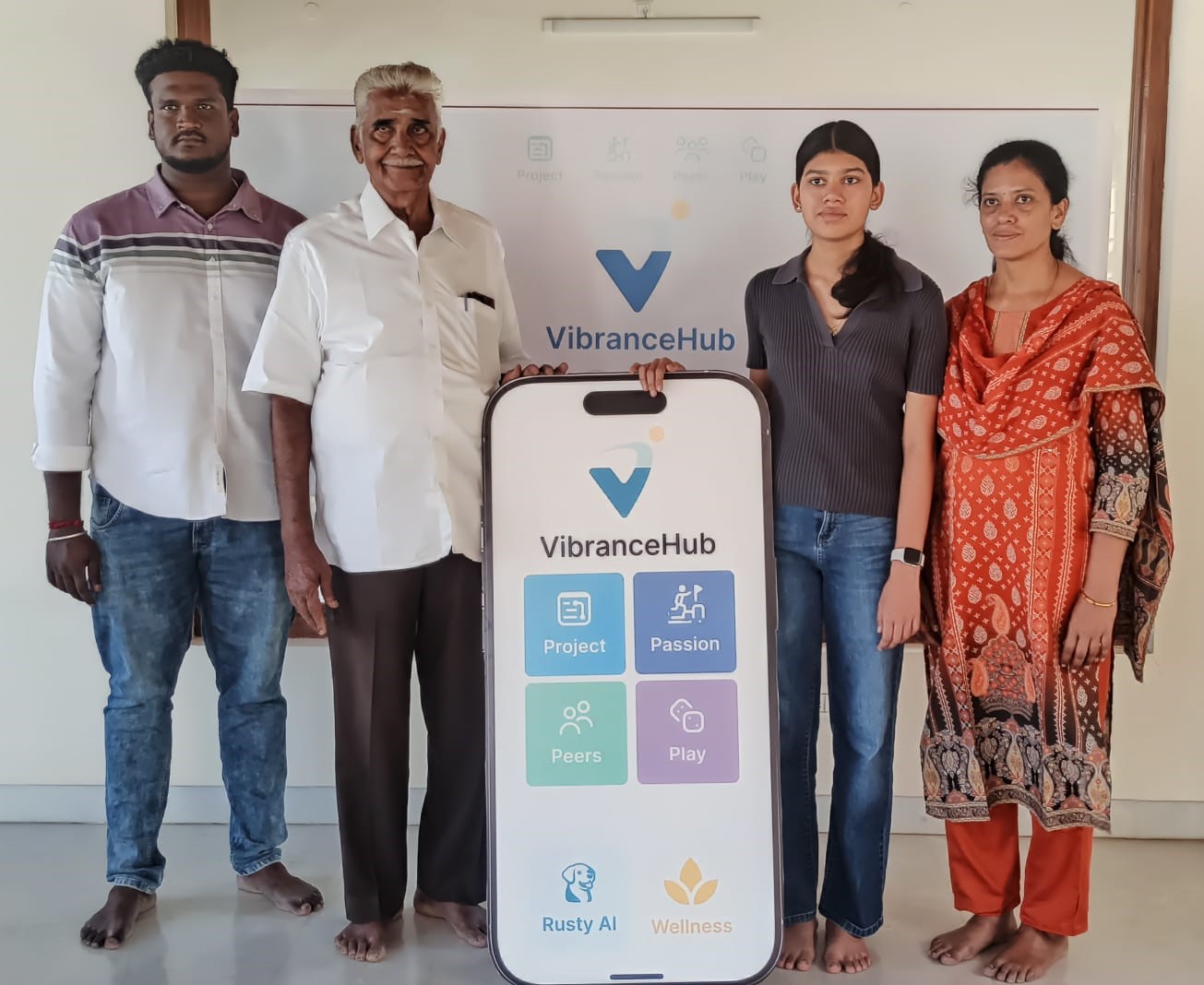
COIMBATORE — Rithanya Sivaram, a Class 12 student at The Indian Public School, launched Vibrance Hub, a platform that unites project-based learning, peer collaboration, and wellbeing support. This innovative initiative addresses a vital gap as India prepares students for an AI-driven future where creativity and sustained innovation outweigh rote knowledge.
“In the age of AI, information is commoditized. What matters now is what you can make, how you think, and whether you can sustain creative work over time,” says Sivaram. “Atal Tinkering Labs has provided students with tools to tinker on a national scale, while Vibrance Hub offers the scaffolding, community, and wellbeing practices to turn interest into sustained making.”
Grounded in MIT’s Lifelong Kindergarten framework—Passion, Projects, Peers, and Play—Vibrance Hub emphasizes that maker education is not solely about building objects. It fosters critical skills such as computational thinking, resilience through iteration, and collaboration—attributes that artificial intelligence cannot replicate.
Children initially approach problems through fearless experimentation. However, years of standardized testing and “correct answer” mentalities often undermine that confidence. They become cautious and self-critical, hesitating to try new things without guaranteed success. The intrinsic creativity that once flourished becomes buried beneath layers of practicality and perfectionism, leading many to self-identify as “not creative” individuals.
Vibrance Hub represents a return to India’s educational roots. The gurukul tradition before Macaulay’s infamous Minute on Education in February 1835 emphasized learning through active creation. Students learned metallurgy by forging, astronomy by observing, and medicine by practicing—not through passive consumption of knowledge.
The National Education Policy (NEP) 2020 explicitly advocates for reviving this maker-centric approach. It recognizes that India’s future prosperity relies on creators and innovators rather than mere information repeaters.
The Atal Innovation Mission (AIM), initiated in 2016 by NITI Aayog, represents India’s most ambitious effort to implement a maker-centric philosophy on a large scale. AIM addresses NEP 2020’s call to foster creativity and innovation by providing tangible infrastructure necessary for hands-on learning across the country.
As Vibrance Hub takes flight, it signals a pivotal shift in education. It empowers students by reconnecting them with their creative instincts and enabling them to engage actively with their surroundings. This initiative not only prepares them for the demands of an evolving job market but also helps cultivate a generation geared towards problem-solving and innovation.
In a world increasingly influenced by artificial intelligence and automation, initiatives like Vibrance Hub could play a decisive role in shaping a culture of creativity and collaboration among students. By intertwining educational practices with wellness, Rithanya Sivaram’s vision addresses both the intellectual and emotional needs of young innovators, paving the way for a brighter, more creative future.